

















What is an image-guided biopsy?
An image-guided biopsy is a minimally invasive procedure used to obtain a small sample of tissue for laboratory testing.
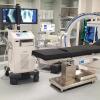
Using imaging such as ultrasound or CT guidance, an Interventional Radiologist can accurately guide a needle to the area of concern to collect tissue samples for diagnosis.

Why might I need a biopsy?
Your doctor may recommend a biopsy to investigate an abnormality detected during imaging or to help diagnose a range of conditions, including infection, inflammation, or cancer.
A biopsy can provide important information to help guide treatment decisions and ongoing care.
How is a biopsy performed?
The procedure is performed by an Interventional Radiologist using imaging guidance to accurately target the area being examined.
The skin is cleaned and numbed with a local anaesthetic before a needle is inserted to obtain tissue samples. The number of samples required will depend on the area being biopsied.
Most biopsies are performed as outpatient procedures and typically take between 30 and 60 minutes.